Untamed. Reverent.
Enduring.
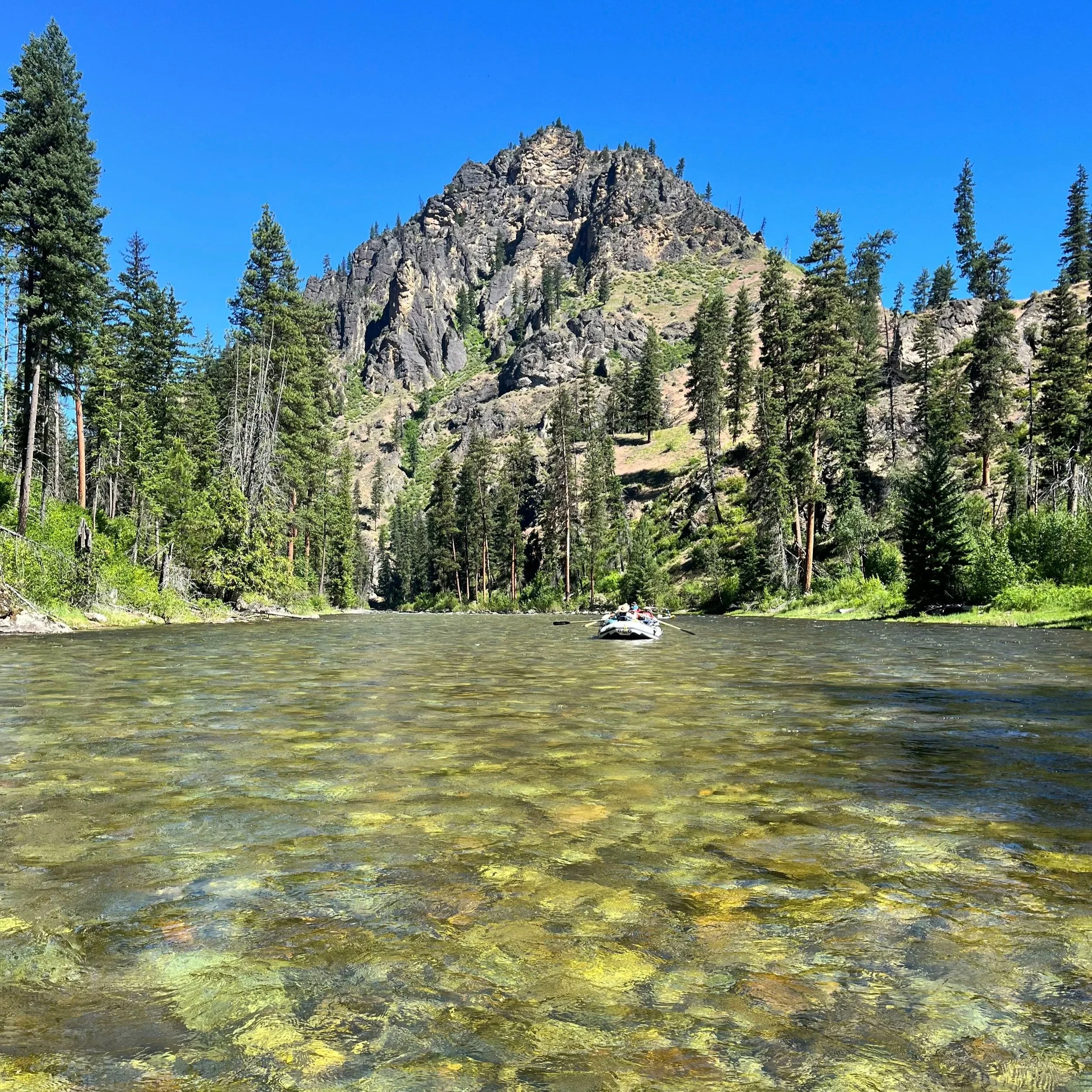
The Selway
The Selway / Selwai River holds a singular place in the history of river conservation in the United States. In 1968, it was named one of the original eight rivers protected under the National Wild and Scenic Rivers Act, a landmark piece of legislation created to preserve the free-flowing character, water quality, and outstanding natural and cultural values of the nation’s most exceptional rivers. This early designation recognized the Selway not only for its scenic beauty, but for its intact ecological systems and enduring wilderness character.
Long before federal protection, the Selway River flowed through the homelands of the Nez Perce (Nimiipuu) and Snake peoples, whose seasonal travel, subsistence practices, and cultural traditions were deeply connected to the river and the surrounding landscape. The name Selwai is believed to come from Indigenous languages meaning “smooth water,” reflecting both an intimate knowledge of the river and a relationship shaped over generations.
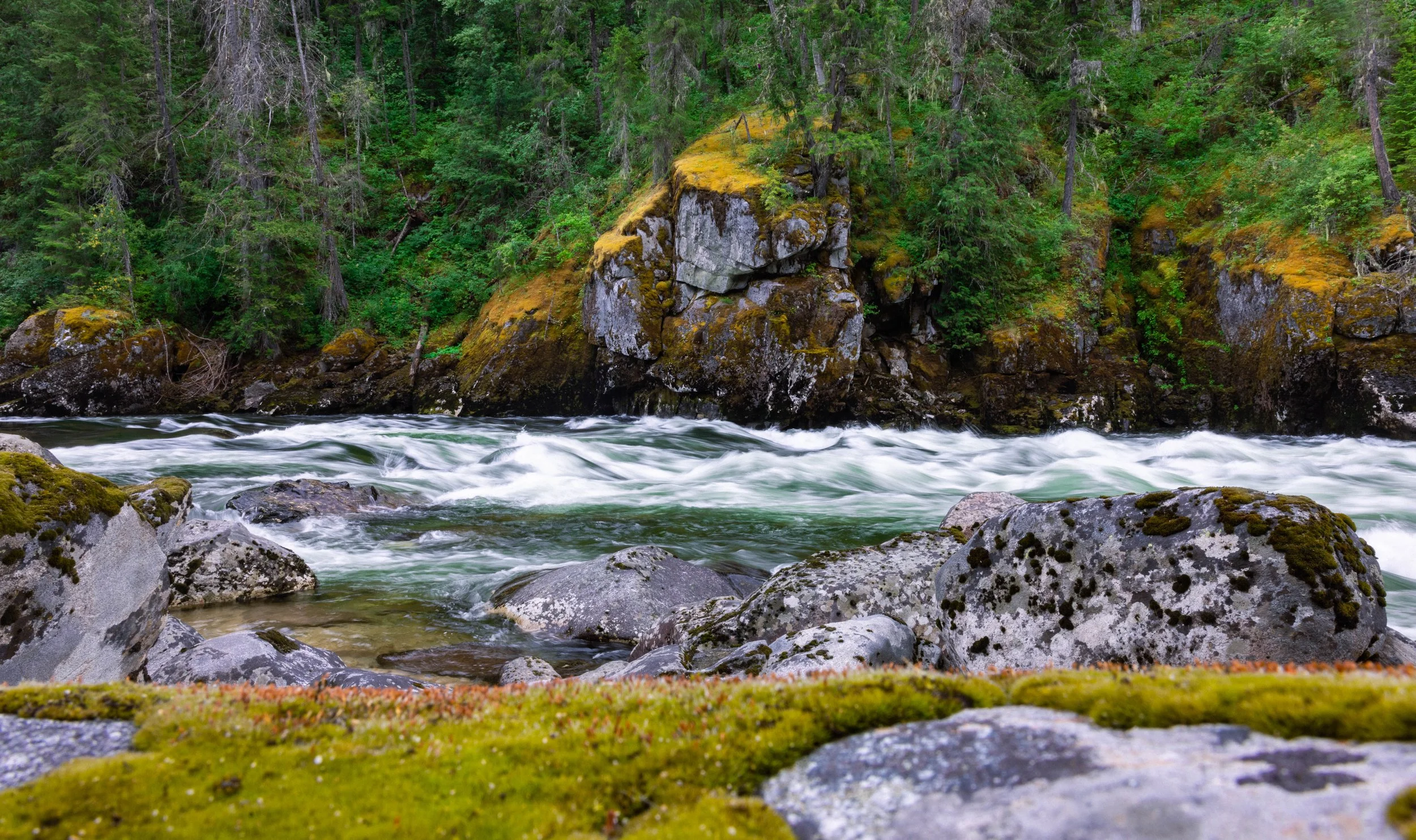
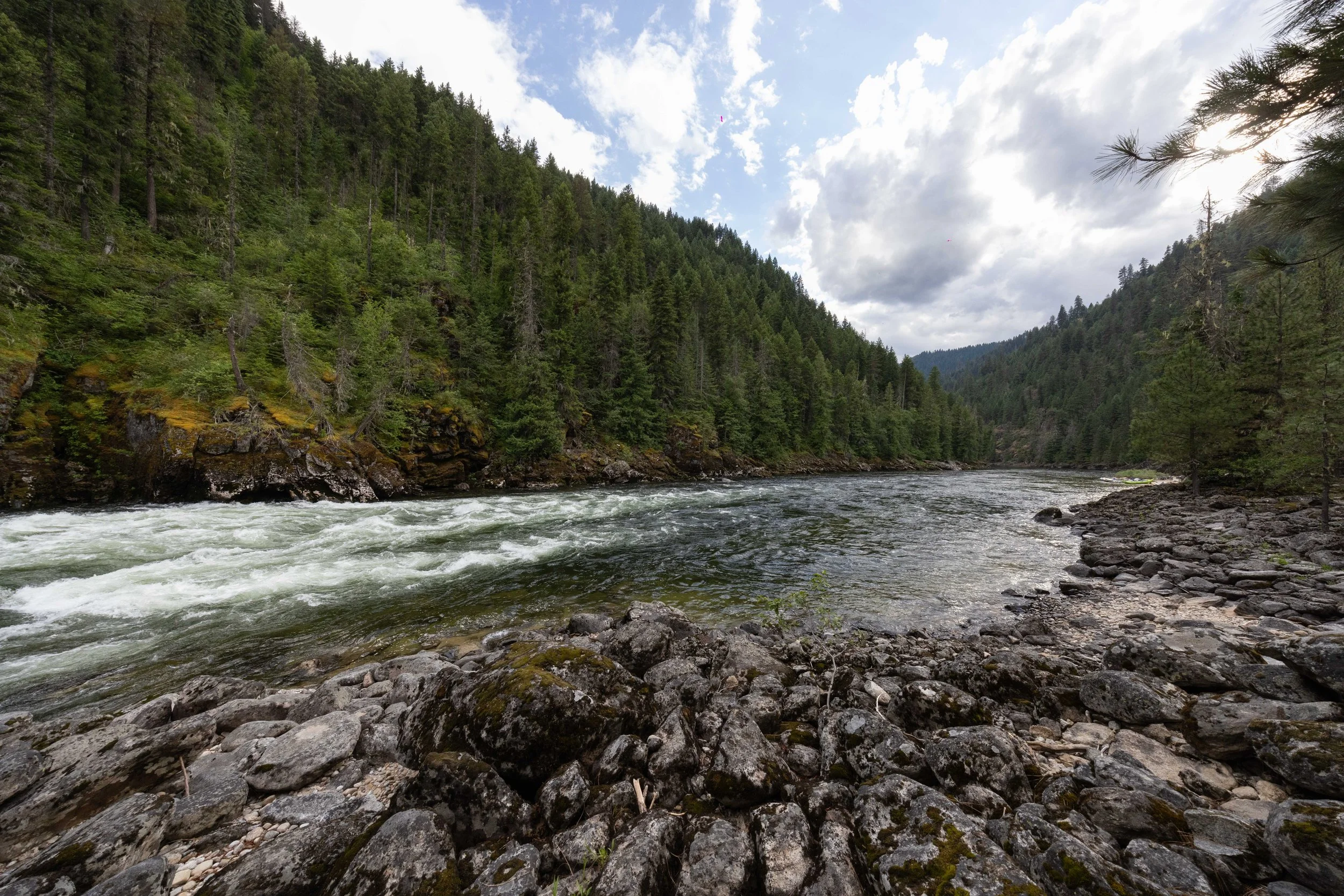
Today, the river flows for 47 miles through the heart of Idaho’s Selway–Bitterroot Wilderness, one of the largest roadless wilderness areas in the Lower 48. This vast and rugged landscape, defined by steep granite canyons, dense cedar and fir forests, and isolated tributary creeks, has remained largely unchanged for centuries. The Selway River corridor supports one of the largest inland temperate rainforests in North America, sustained by high precipitation, cold clear water, and deeply shaded canyons.
The Selway’s continued wildness is the result of both its geography and intentional stewardship. Managed by the U.S. Forest Service, the river is subject to strict access limits: only one group per day, with no more than 16 people, is permitted to float this section. These protections help preserve wildlife habitat, ecological function, and the profound sense of solitude that has defined the Selway for generations.
Traveling the Selway
To travel the Selway River is to move through a landscape shaped by time, water, and human restraint. Access remains intentionally limited, allowing the river to retain its wild character and cultural significance.
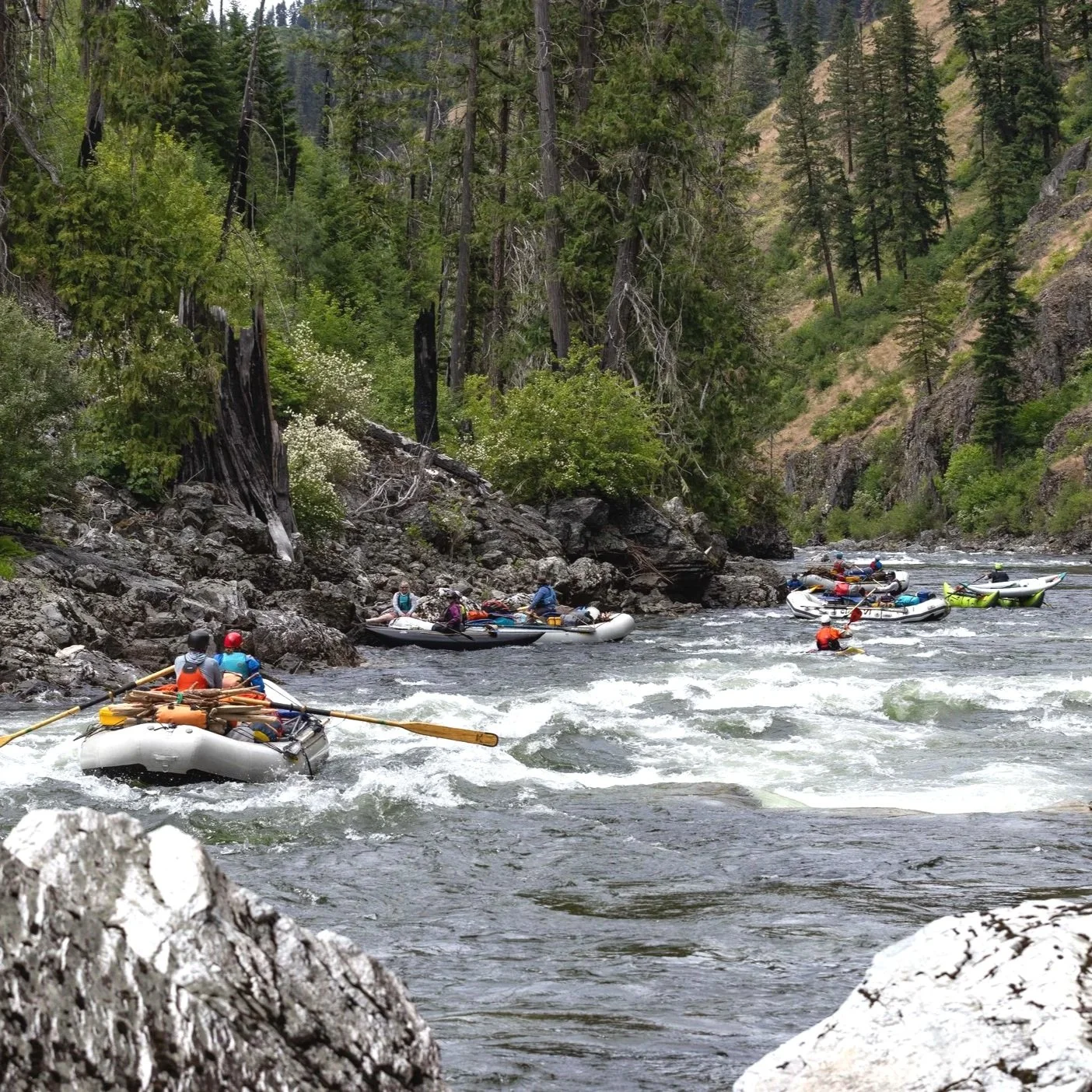
The Selway’s high elevation and snowmelt-driven flows create a brief and highly variable boating season, often lasting only several weeks each year. Combined with technical whitewater and limited permits, this makes the Selway one of the most exclusive river journeys in North America. With an average gradient of 28 feet per mile -steepening to over 50 feet per mile below Moose Creek - the river features 38 named rapids, many rated Class IV+, set within continuous, undeveloped wilderness.
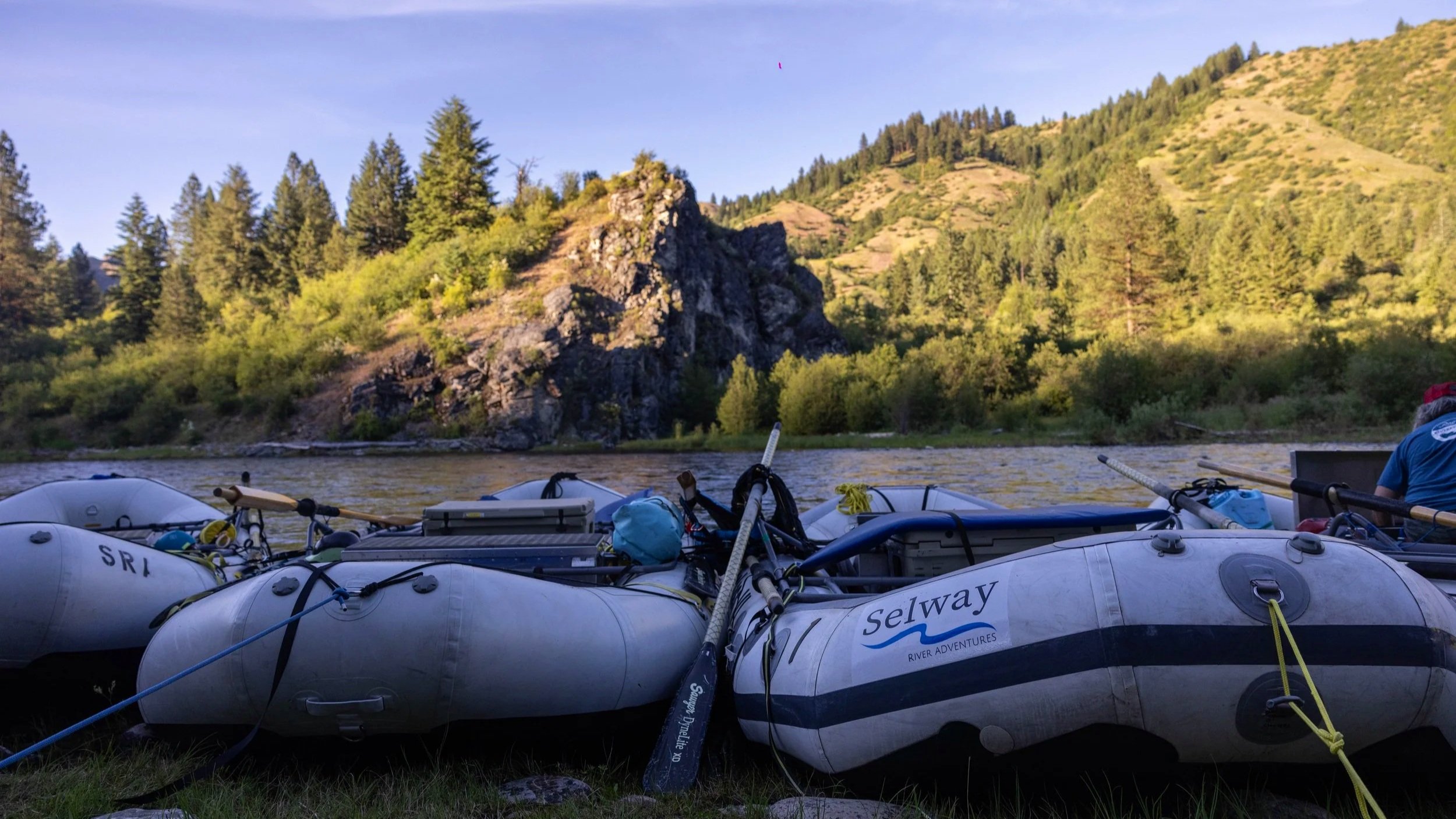
Multi-day journeys typically span 5 to 6 days, covering the 47-mile stretch from the Paradise Guard Station to the take-out at Race Creek above Selway Falls. Along the way, travelers move through deep canyons, old-growth forests, and remote campsites accessible only by boat. There are no roads, no towns, and no modern intrusions, only the river corridor and the living systems it sustains.
What distinguishes the Selway is not only the challenge of its whitewater, but the integrity of the place itself. It remains a river where conservation, cultural history, and wilderness protection intersect, offering a rare opportunity to experience a landscape that continues to be shaped more by natural forces than by human design.
Location
The Selway River put-in at Paradise Guard Station is located approximately 75–85 miles southwest of Hamilton and is about a ~3 hour drive from Hamilton. Paradise Guard Station is just over the Montana border in Idaho, near the eastern edge of the Selway-Bitterroot Wilderness.
From Paradise, the Selway River flows west and northwest for approximately 47 river miles, entirely within designated wilderness. The river corridor is roadless and inaccessible by vehicle.
The trip ends at the Race Creek take-out located just upstream of Selway Falls. This point marks the lower end of the standard rafting section of the Selway River. The shuttle back to Hamilton follows the road along the river and then Highway 12 east along the Lochsa River before returning to Montana.
The Race Creek take-out is approximately 120–140 road miles from Hamilton and typically takes 4-5 hours of travel, depending on road and weather conditions.